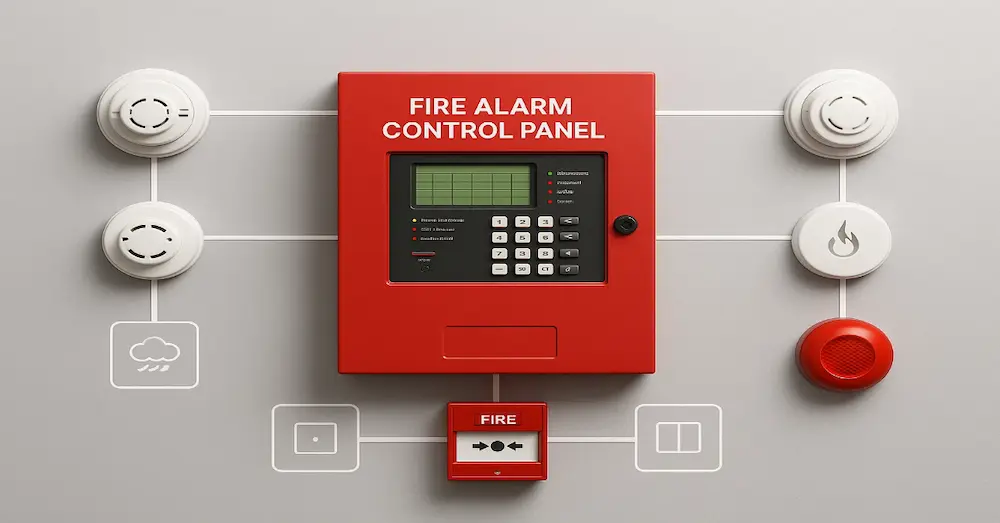
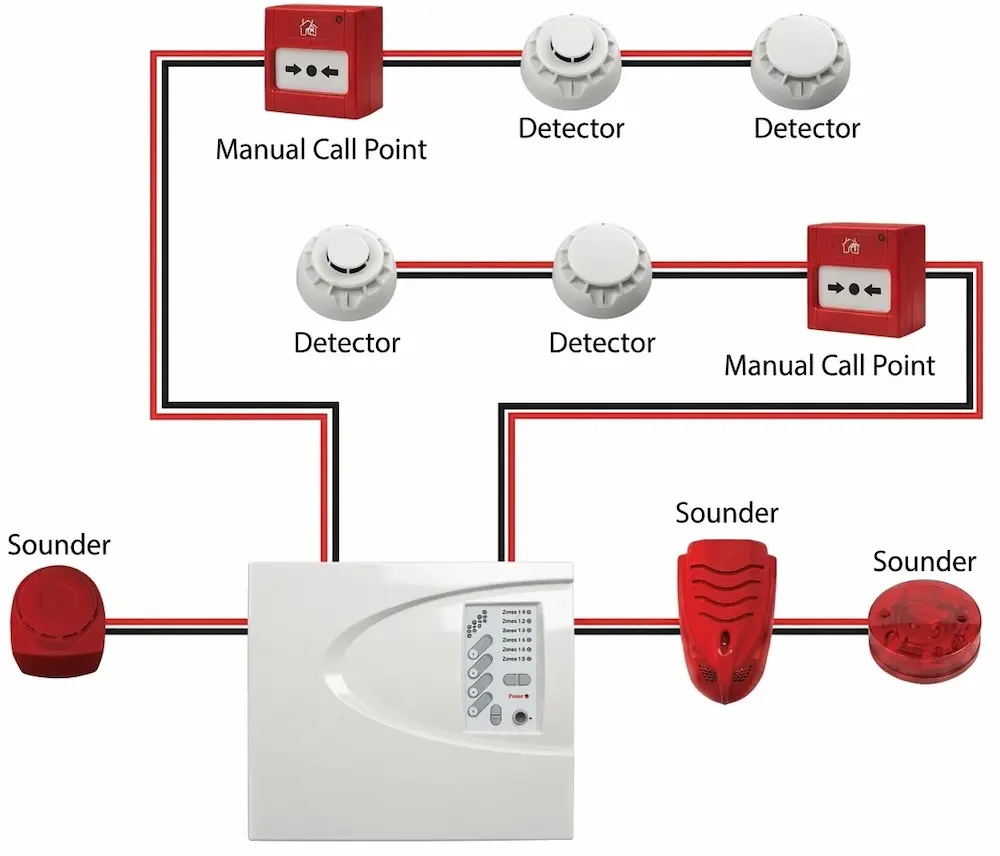
Early detection is paramount to saving lives and minimizing asset damage, which is why we specialize in intelligent Fire Detection and Alarm Systems tailored to your facility’s precise layout. Our engineering team designs and deploys advanced addressable and conventional fire alarm networks in accordance with NFPA 72, utilizing highly accurate multi-criteria smoke detectors, heat detectors, and linear heat detection cables. For specialized environments, we implement high-sensitivity smoke detection systems and industrial flame detectors, all seamlessly integrated with your HVAC systems for automated damper control, Building Management Systems, and building access control.
Intelligent Addressable Fire Alarm System
Advanced network (NFPA 72) where every detector has a unique ID. In an emergency, the central panel displays the exact location of the smoke or heat, drastically reducing response times in large facilities.
Conventional Fire Alarm System
Cost-effective and highly reliable system ideal for smaller commercial spaces or low-rise buildings, organizing detection by broad “zones” rather than individual points.
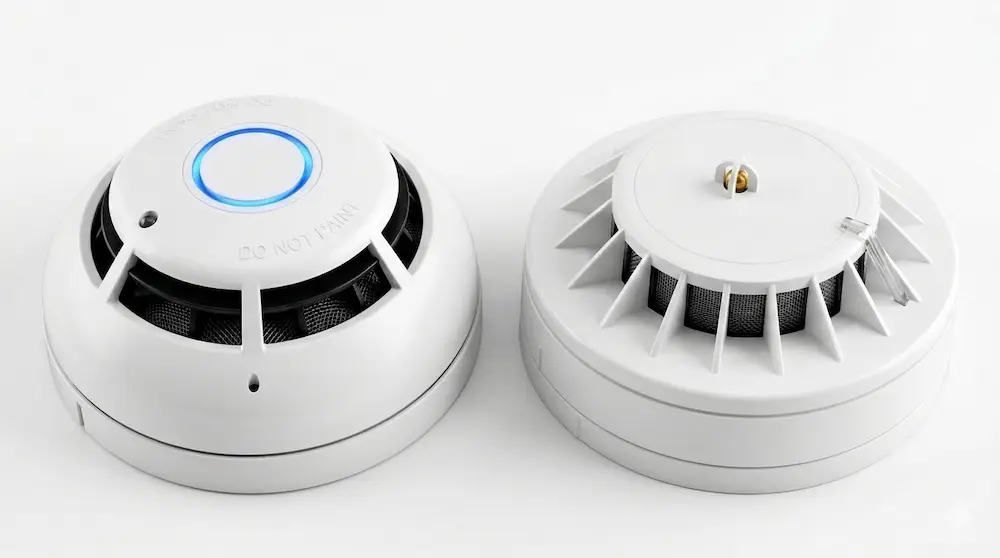
Optical Smoke Detectors & Heat Detectors
High-precision sensors designed to detect smoldering fires (via light scattering technology) or rapid temperature spikes (Fixed/Rate-of-Rise) to trigger alarms instantly.
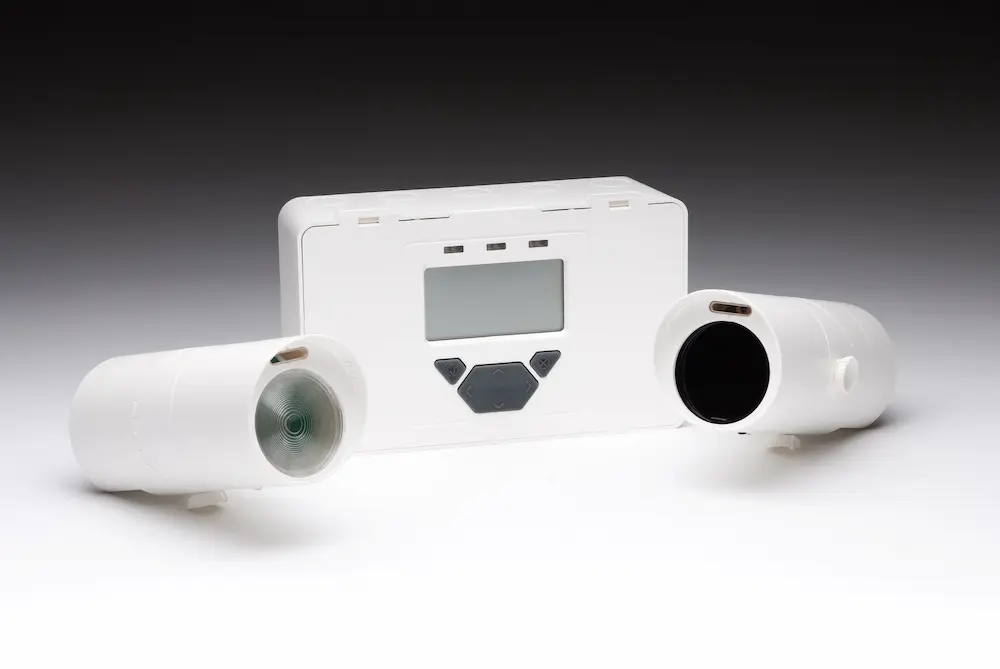
Beam Detectors
Long-range optical smoke detectors perfect for high-ceiling environments like open warehouses, factory floors, and airport terminals where standard spot detectors are ineffective.
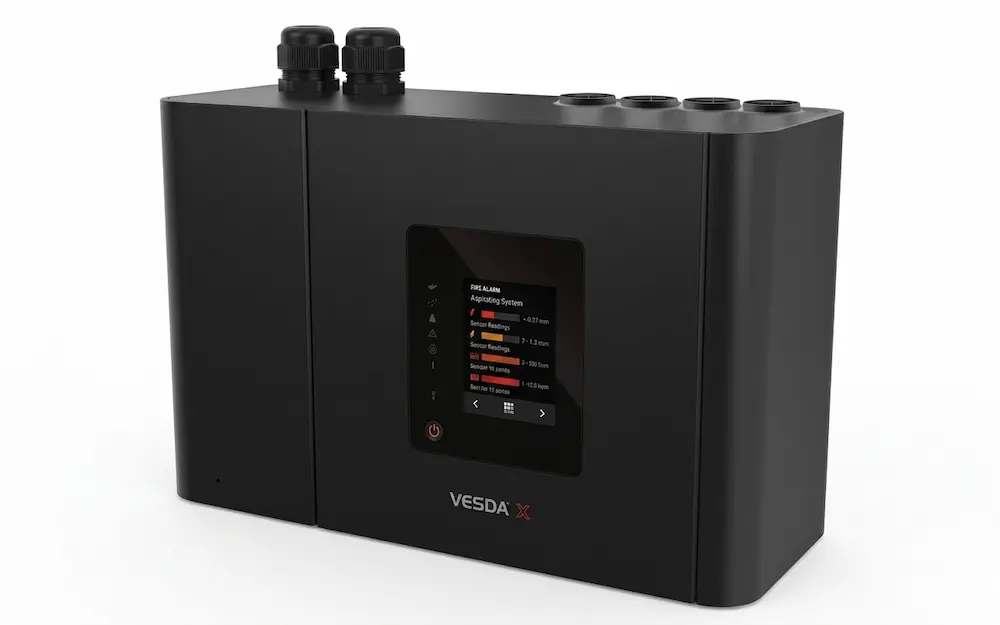
VESDA / HSSD (High-Sensitivity Smoke Detection)
Aspirating smoke detection systems that continuously draw air through a pipe network to sample it with a laser. It detects invisible byproducts of smoke long before a fire breaks out.
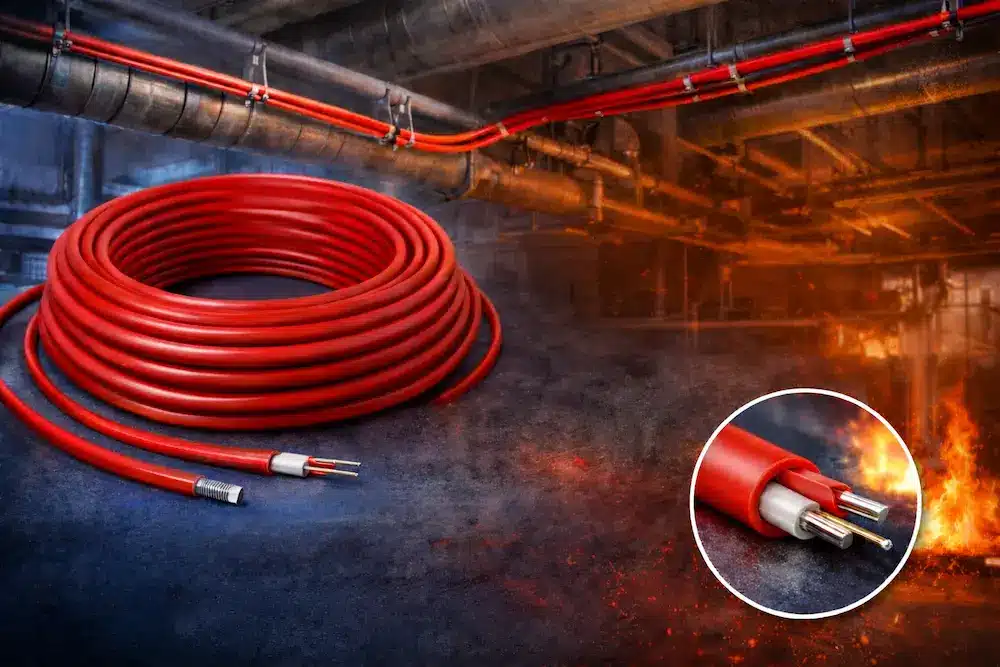
Linear Heat Detection (LHD) Cables
Specialized sensor cables that detect temperature changes along their entire length, widely used in cable trays, conveyors, tunnels, and outdoor industrial environments.
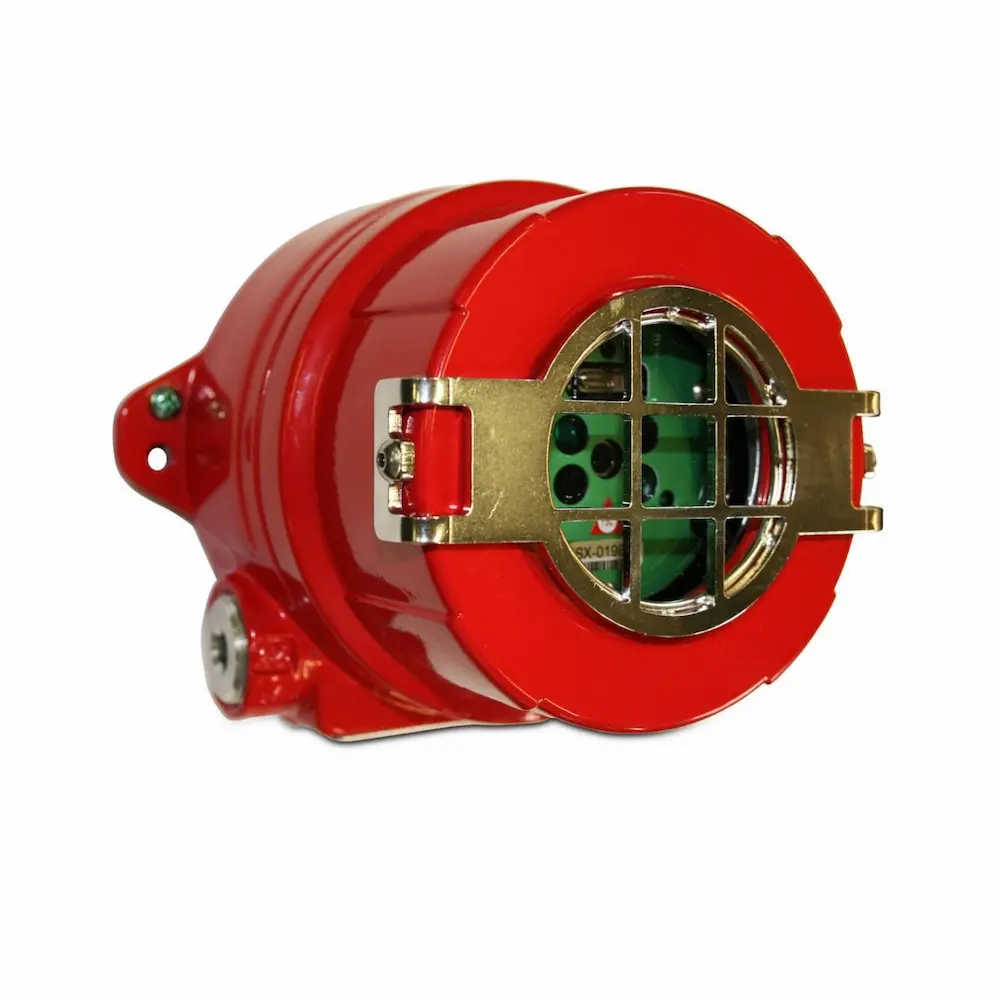
Flame Detectors
Optical sensors that detect the specific infrared (IR) or ultraviolet (UV) radiation emitted by open flames, used in high-risk areas like fuel storage and chemical zones.
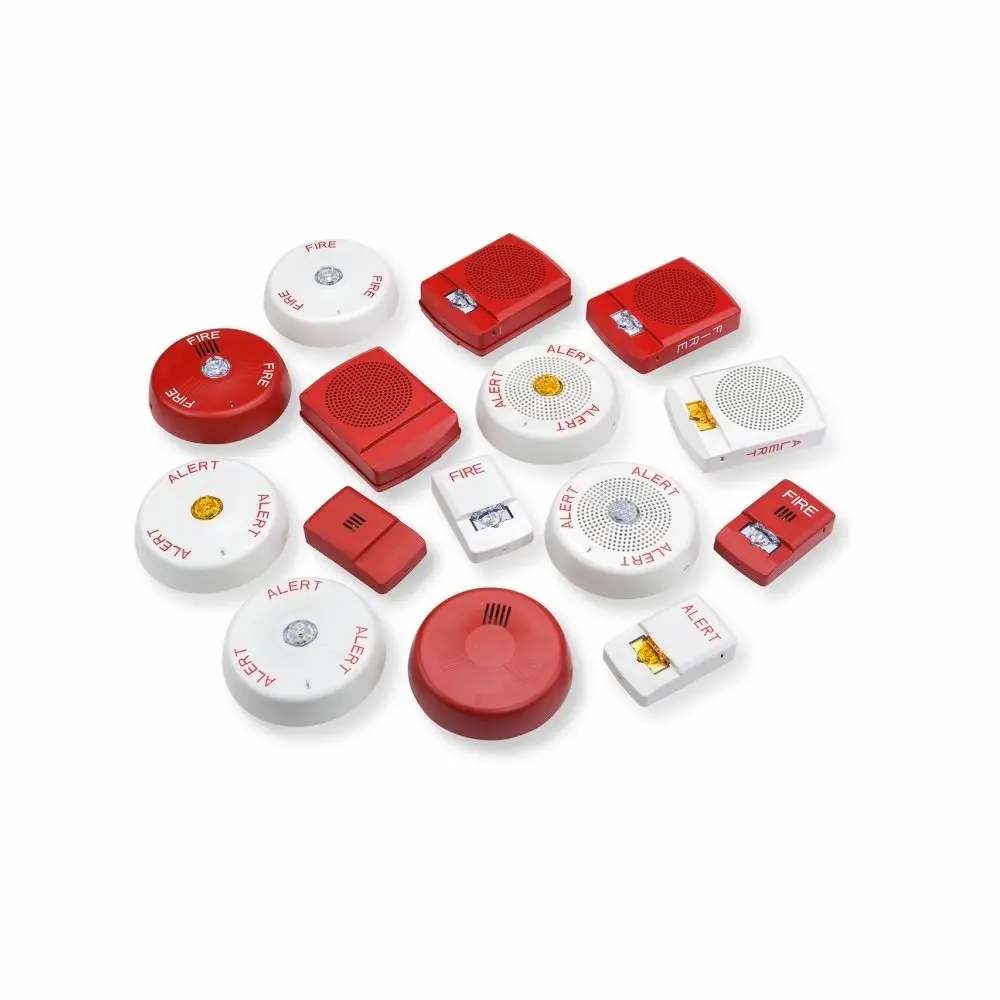
Notification Devices
A complete array of synchronized fire alarm hooters, high-visibility strobe lights, and manual call points (break-glass units) for manual alarm activation.